
Drought
On losing yourself and other thoughts

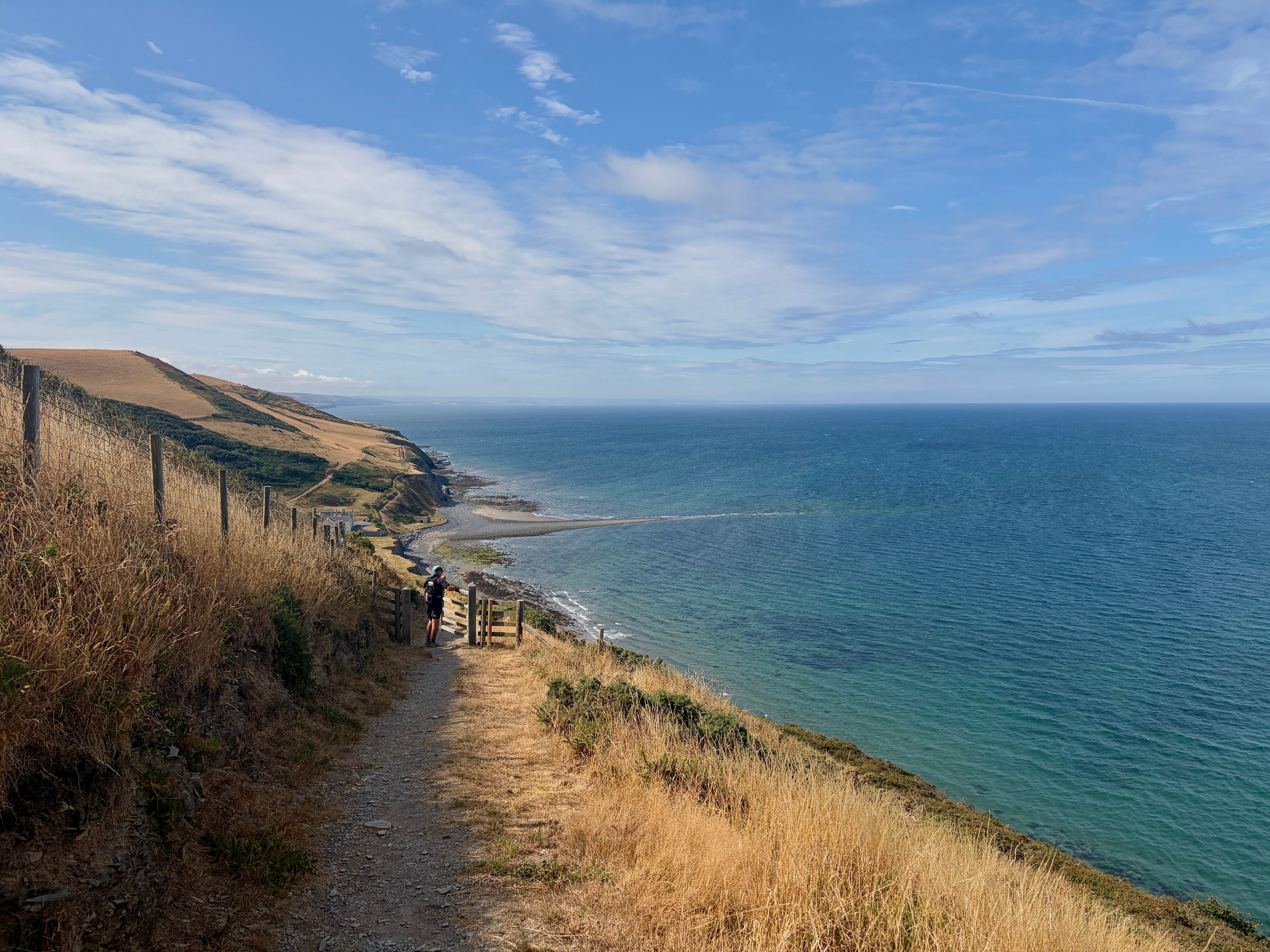
A thin film of dust settles on my skin. Around me, stubble pushes through cracked, cured clay. This is the forty-second day without rain.
Today a young roe deer stood in the empty channel of the riverbed, his hooves braced against brittle stone, nosing patiently between weeds in search of water. The land has taken on the yellowed hue of early death, yet the farmers tell me this is how it survives: the grasses retreat above ground so that the roots below can endure. I imagine them as threads woven through the earth, a hidden network holding fast in the darkness, sustaining one another until the rain finally returns.
As surely as the earth needs water, I know this drought. By day I feel it beneath my skin, by night it settles into my clenched jaw and restless sleep. For six years the medication I have taken after cancer has worked quietly, almost invisibly, like heat drawing moisture from the soil. Ten years of prevention, they told me. I remember crying the first day I swallowed that little white pill, not because I feared dying, but because I feared becoming someone I no longer recognised. It was another roll of the dice, another unseen defence against a future that might never come, and wouldn’t any of us do almost anything for a little more time? No one tells you that some losses arrive without sound. They gather, one dry day after another, one thought less sharp, one dream further away, until one morning you realise you have stopped reaching for the things that once made you feel most alive.
The tablets did not change me all at once; they weathered me. They softened the edges of my thinking, quietened my curiosity and slowly wore away my resilience until I felt I was somehow outside myself, somehow further away. No one tells you that identity rarely shatters; more often it erodes so gently that you mistake the erosion for yourself. One season the colours lose their richness, then wonder arrives less often. Life grows smaller until your body learns to mistake uncertainty for danger, until you start scanning the horizon for storms that have not yet gathered. Once, uncertainty had felt like adventure. It drew me towards mountains, remote lands and stories not yet written; it asked me to trust my feet, my instincts and the quiet unfolding of whatever lay beyond the next ridge, somewhere along the way that changed. I had begun arranging my life around certainty, mistaking vigilance for wisdom and survival for living. The greatest loss was not my creativity, but the slow forgetting of the woman who believed that not knowing was where life began.
As July turned to August, I found myself longing for the softness of new grass, for the saturated greens of spring, for abundance and stillness, but more than anything, for the roots of my own creativity. How had I not heard my own voice become silent?
Perhaps the first whisper came beside the Welsh sea, the first place I had slept deeply in years. Maybe it was the dolphins carving through the bay, or the seals rising and disappearing beside ribbons of driftwood and seaweed. It did not arrive like a revelation. It was not dramatic like the turning tide, nor insistent like the gulls calling their young to shelter. It came as quietly as a river emptying in drought, so gradually that you don’t notice the water leaving, only that one day it no longer flows.
And what now, as the earth waits for rain?
As the medication leaves my body, something else returns. Before my words comes attention. I notice the swifts in the evening sky preparing to leave, the skylarks raising their young among the ragwort-filled headlands, the scent of blackberries and warm dust rising from the tracks after another cloudless day. I find myself standing still for longer, listening, watching, allowing the landscape to become me. Then, almost without noticing, the words returned—not as a flood breaking its banks, but as a spring rising quietly through dry ground, gathering strength beneath the surface long before it reveals itself.
Yet the fields remind me that rain offers no promises. The roots cannot summon it. They cannot bargain with the sky or persuade the clouds to gather. They can only remain alive beneath the cracked earth, holding on through a season they cannot control.
As summer leans towards autumn, another season waits for me too. Soon I must decide whether to begin the tablets again, not because they can save the life I am living today, but because they may protect a life I hope is still to come. They ask me to surrender something I can feel, for something I can never know. And so I find myself asking the earth a question that for all its quiet wisdom it cannot answer.
What are we willing to sacrifice for a future that cannot be promised?
Would you trade the sharpness of your thoughts for some years you may never have needed to protect? Would you quieten the voice that tells you who you are for the possibility of another spring? How much of ourselves can we slowly surrender before the future we have worked so hard to preserve no longer belongs to the same person? These are not choices any of us would willingly make, and yet life has a way of placing them silently in our hands, asking us to choose, without ever allowing us to know what might have happened had we walked the other path.
Life is lived somewhere between the grace of luck and the choices we make. We tend our fields as carefully as we can, but we cannot command the rain. We nurture what lies beneath because sometimes our belief is the only thing available to us, trusting that unseen things are still alive even when the land above appears lifeless.
Each evening I return to the farmyard. I watch the enduring landscape. Beneath the cracked earth, patient and persistent, the roots continue their unseen work. The well cannot fill until the rain falls; it can only remain deep enough to receive it.
Hope does not often live in certainty. It lives in the quiet belief that beneath the longest drought, the deepest parts of ourselves are waiting for the season in which we can grow.
This is so beautiful and poignant to read. Thank you for bringing us into your dilemma, and the reality of the cruel bargain that when we take what's needed, much can be taken...
I had written a long reply (this is my second go) and then the screen crashed. I take this as a sign to say less. To just sit quietly with you in that question of what will we sacrifice for an unknown future....
It takes such courage to ask, let alone answer, when you're feeling parched. But here you are, here we are...xxx
Stunning, as always. I wish I had more words, but I'm running dry at the moment, too, and amidst one of the driest winters on record here. I'm in a different place, staring down very different sacrifices, but feel my own struggles in your words, too. The anticipatory grief of it all, all the what ifs, and the desire for knowns and certainty. The way the lack of them always seems to crack us open and send us into the underworld looking for answers that don't really exist. I can understand why the old stories talk about Gods and people making shady bargains to feel like they had some control over these things. Here if you ever wanna chat more about it all. Love x